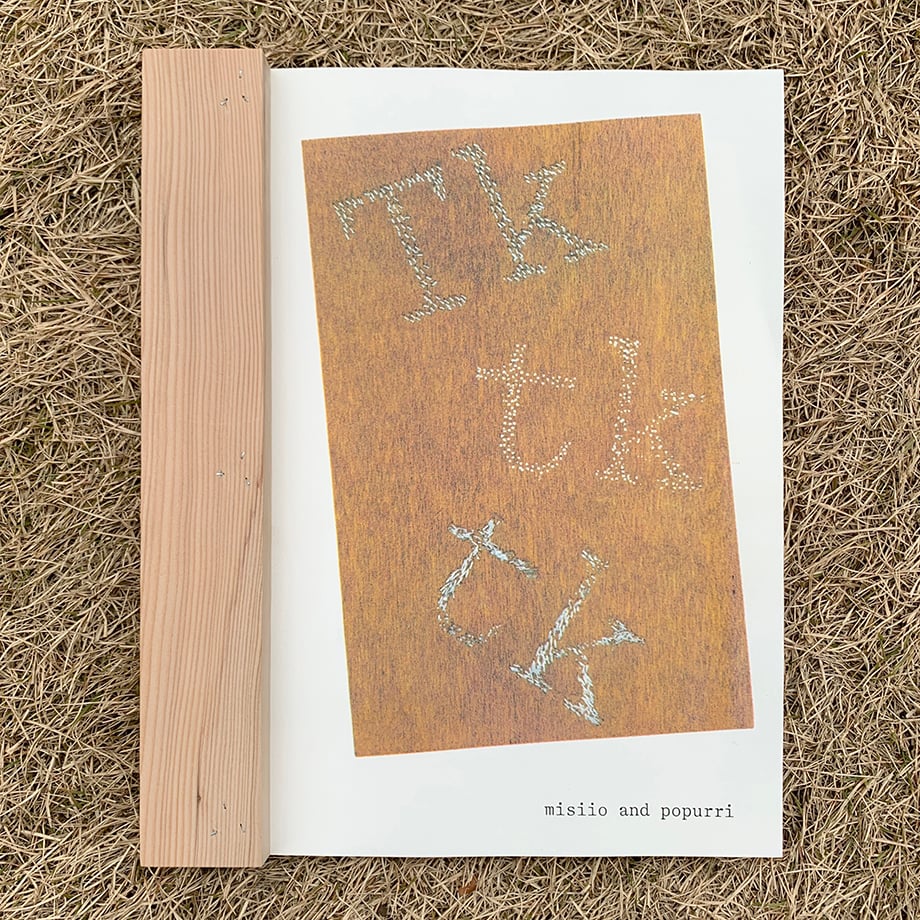
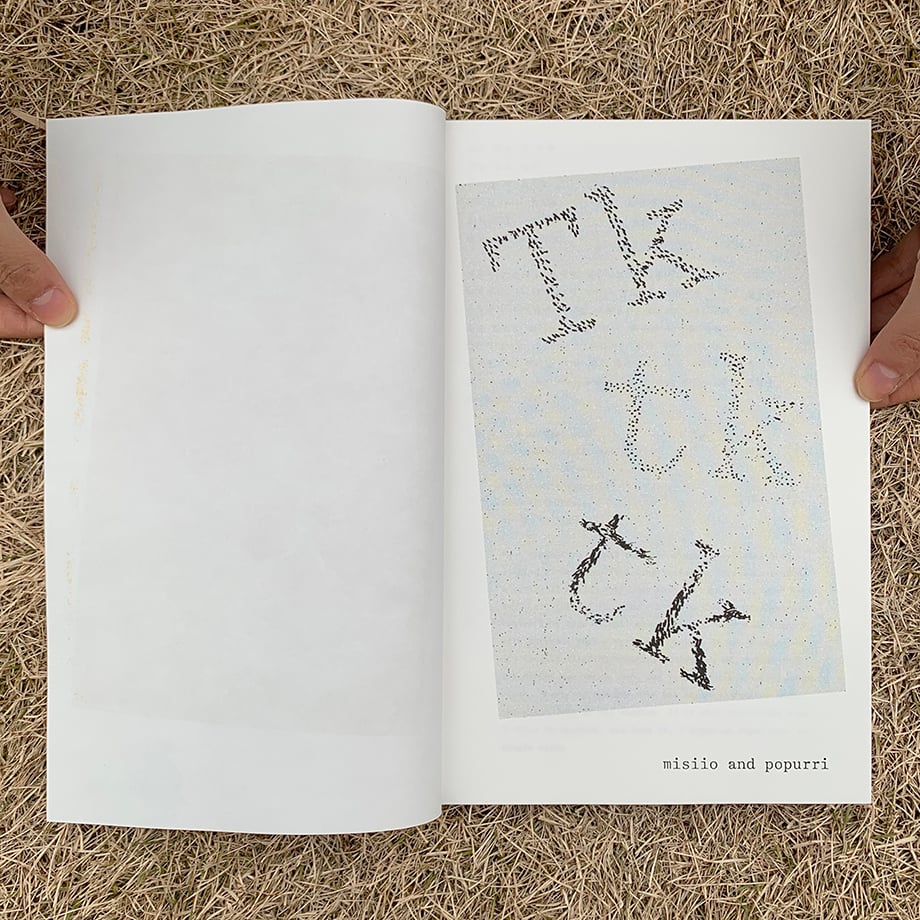
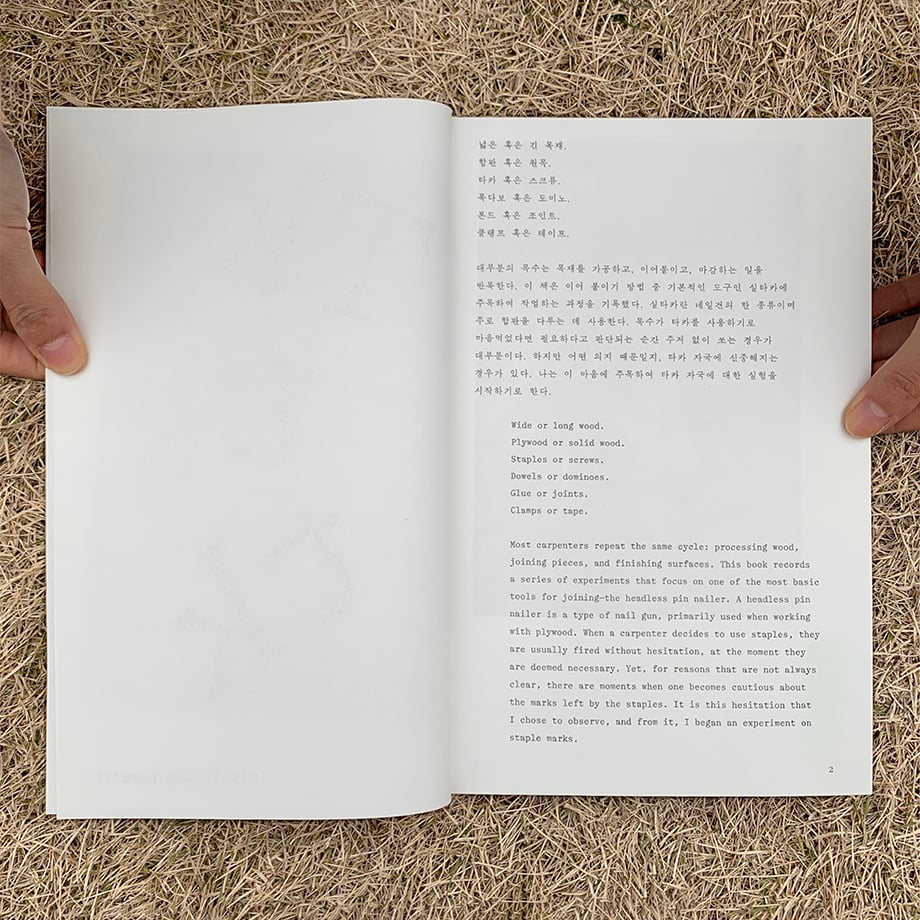
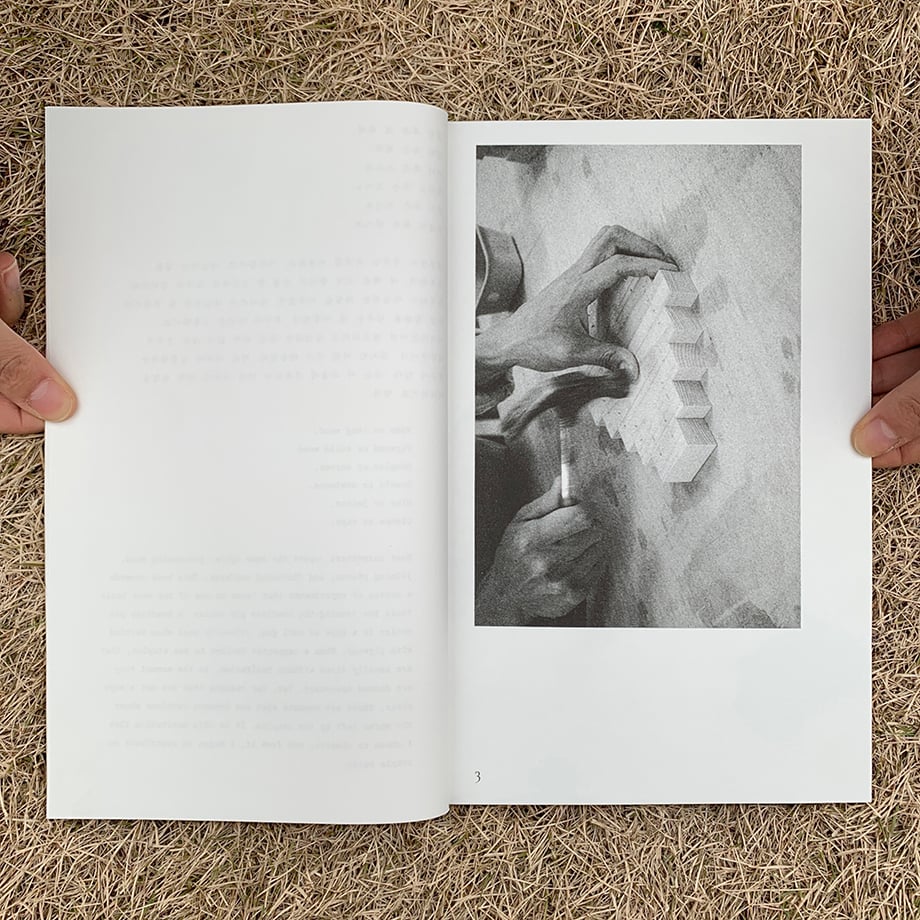
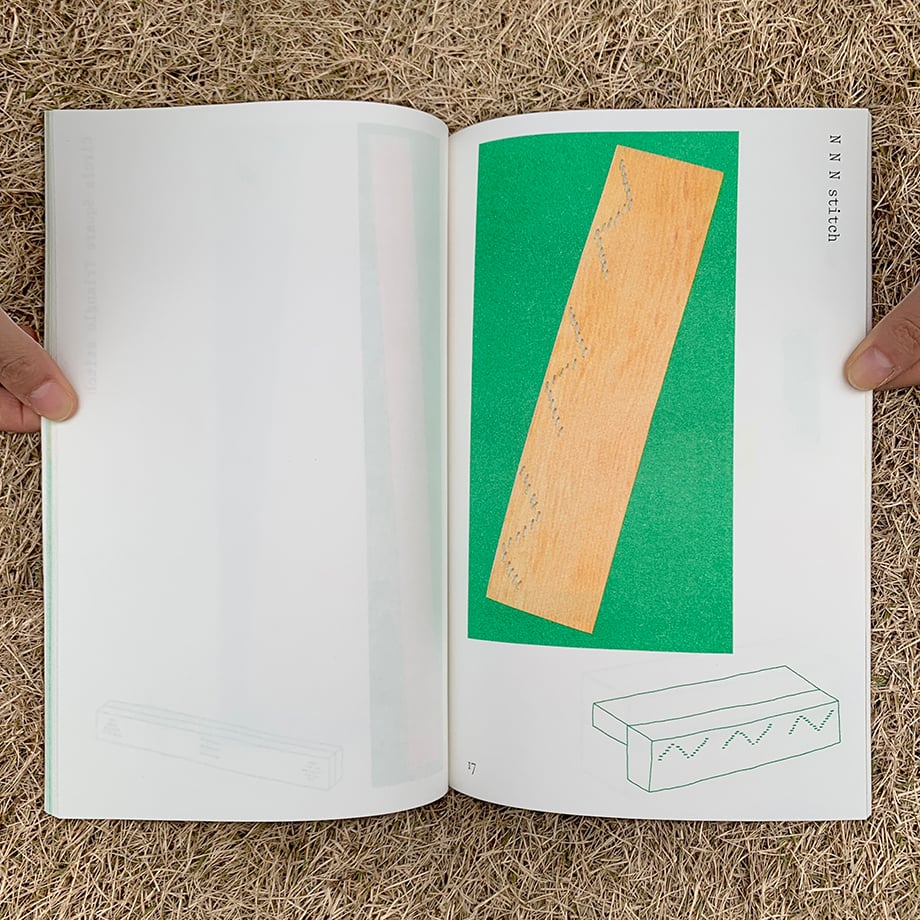
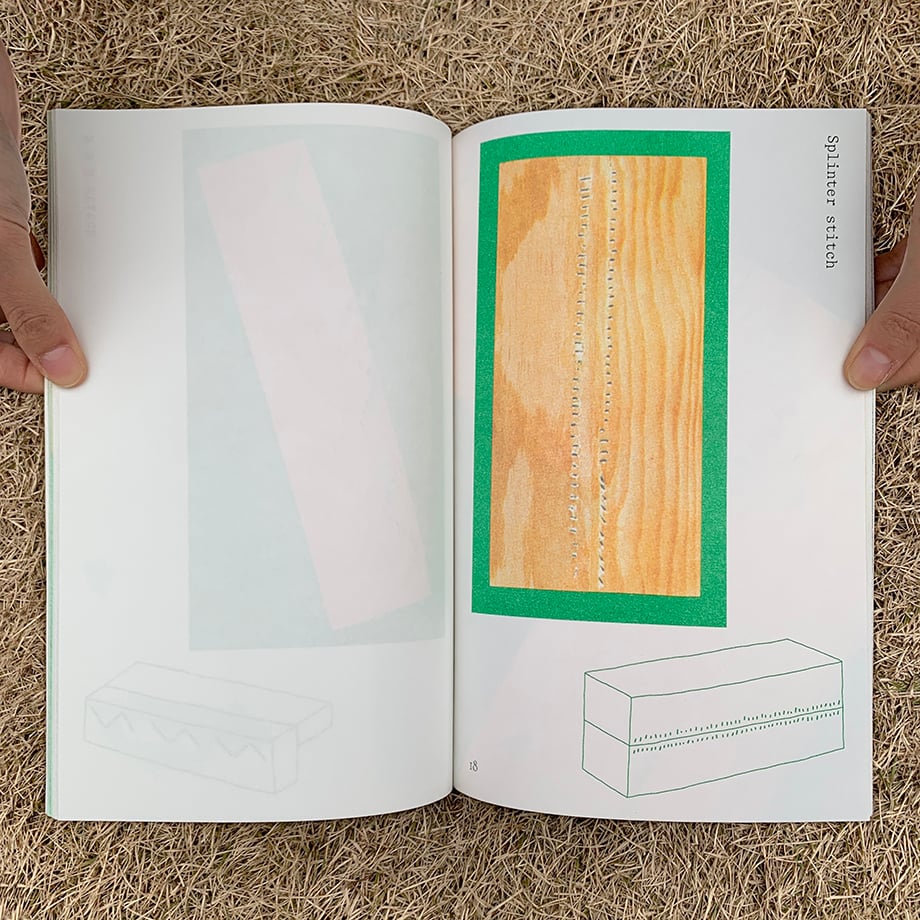
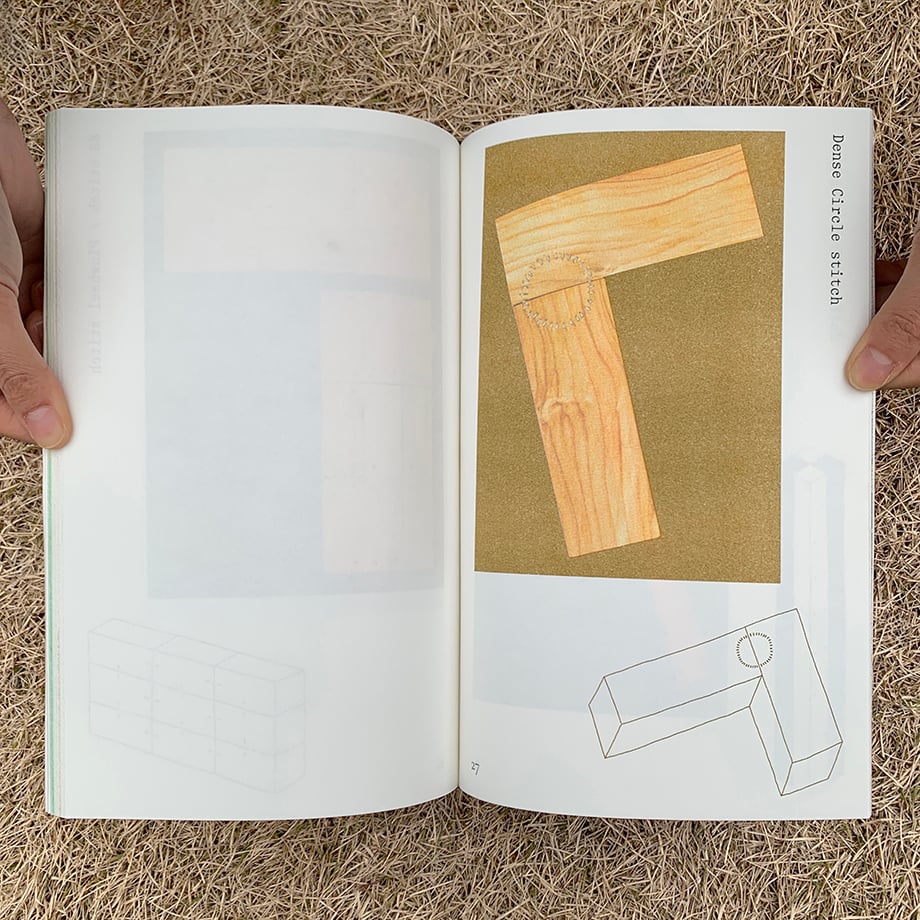
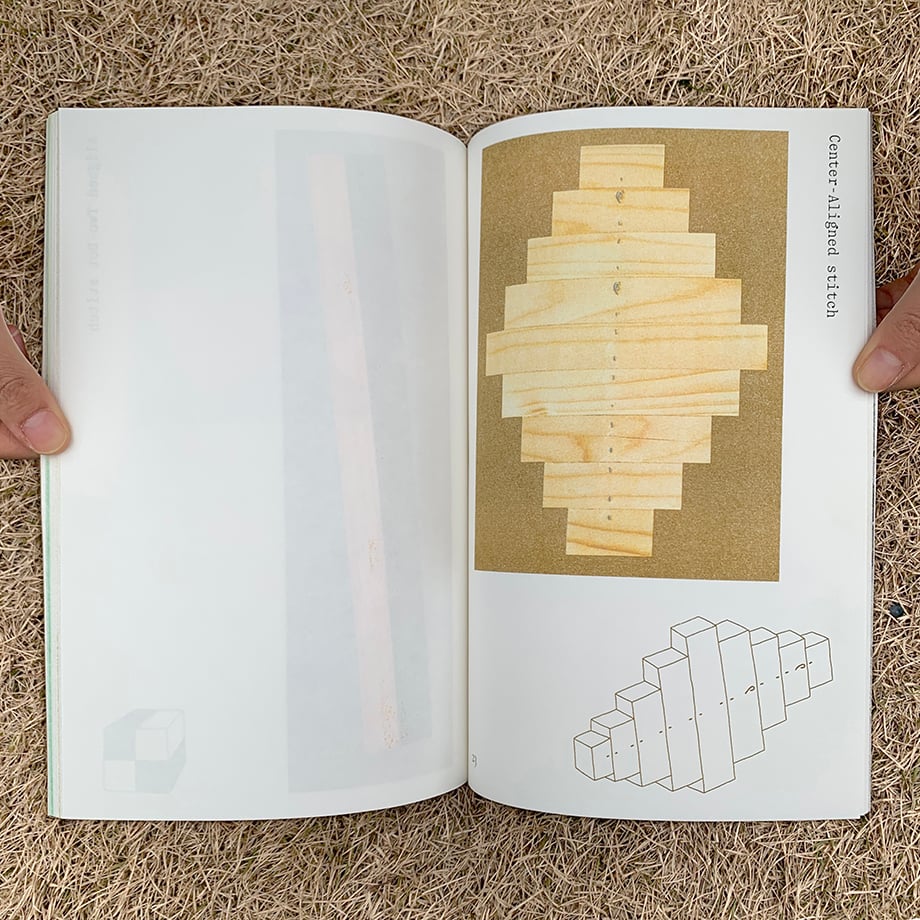
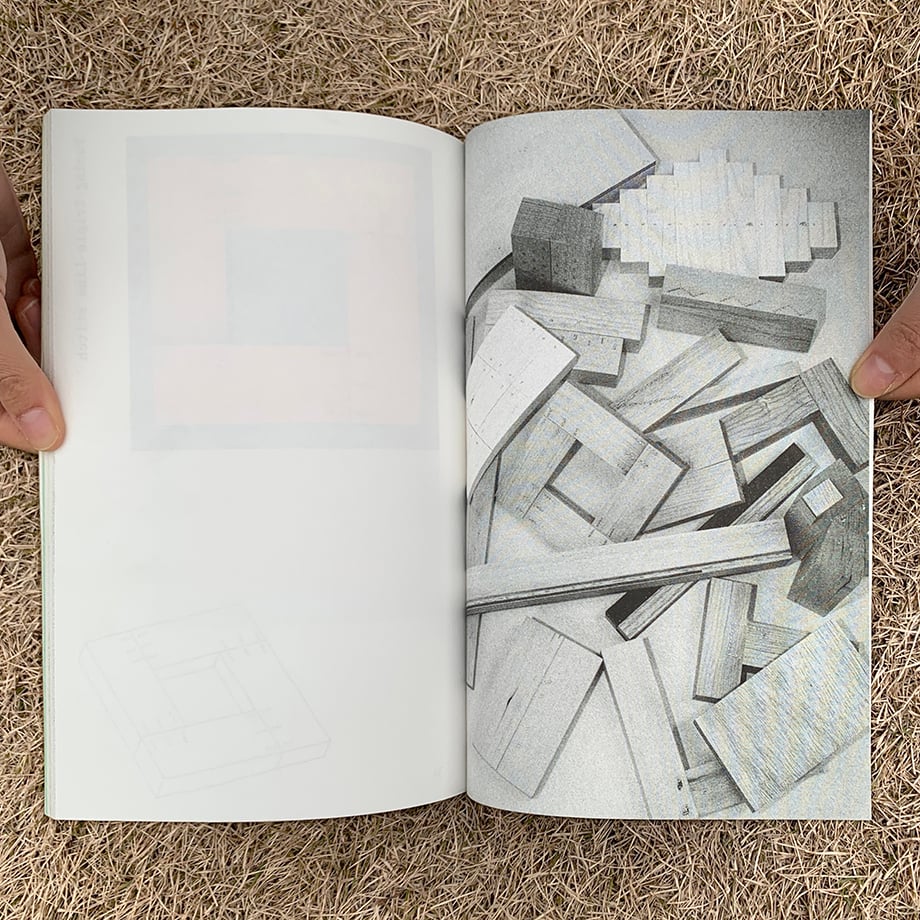
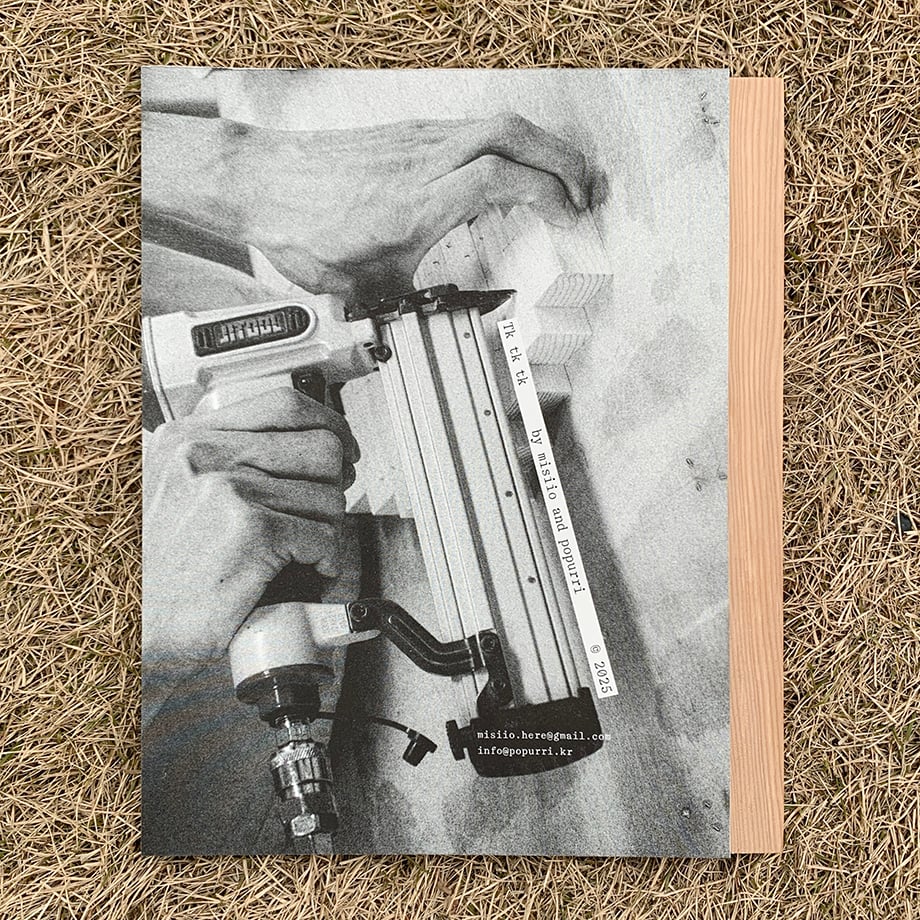
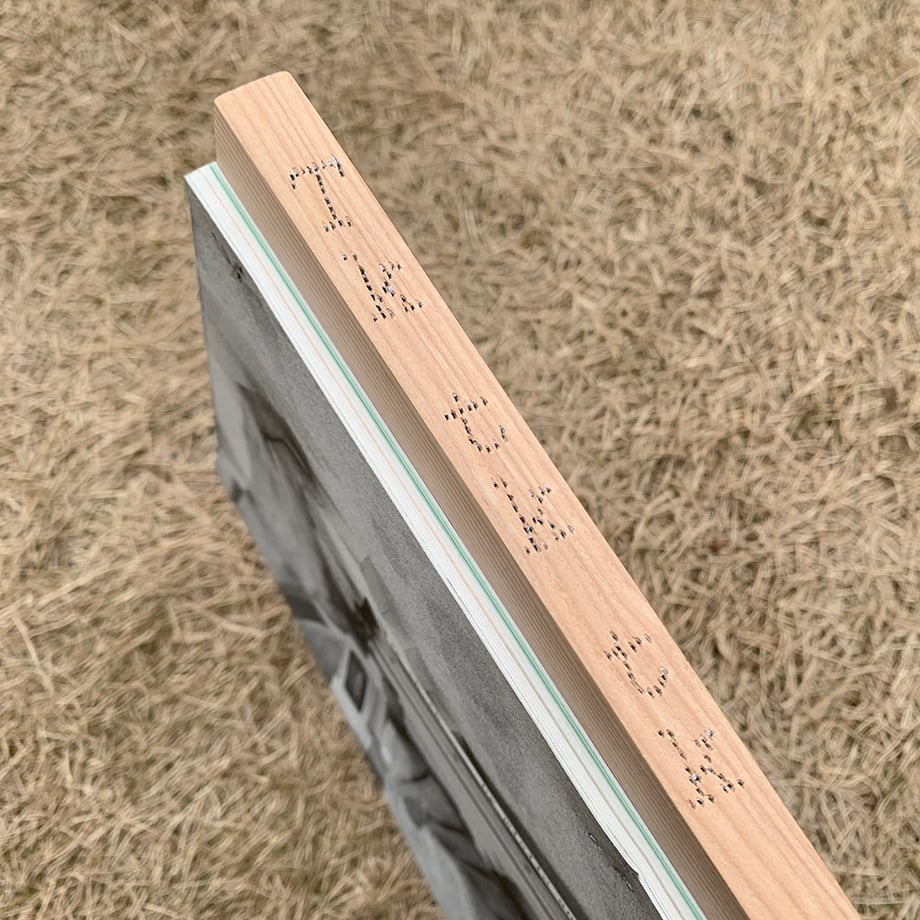
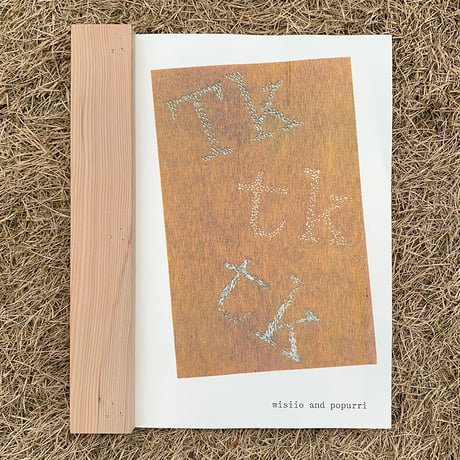
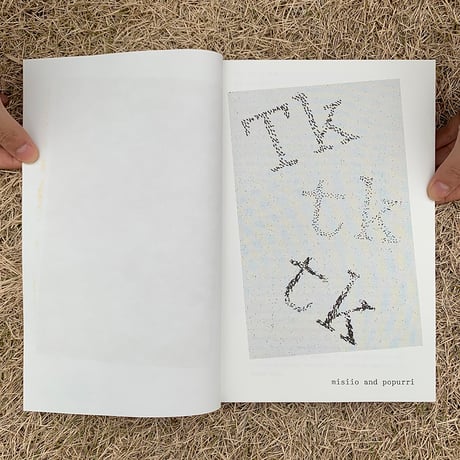
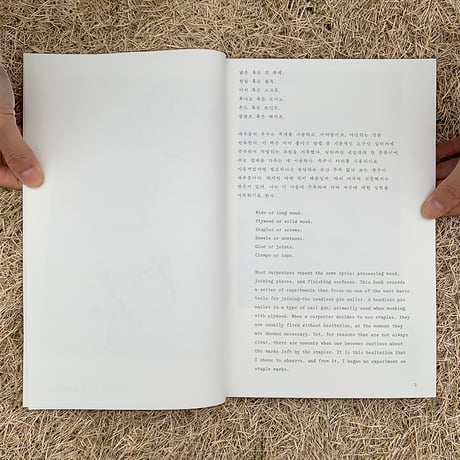
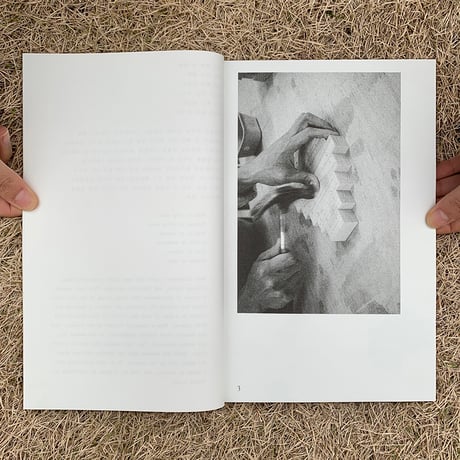
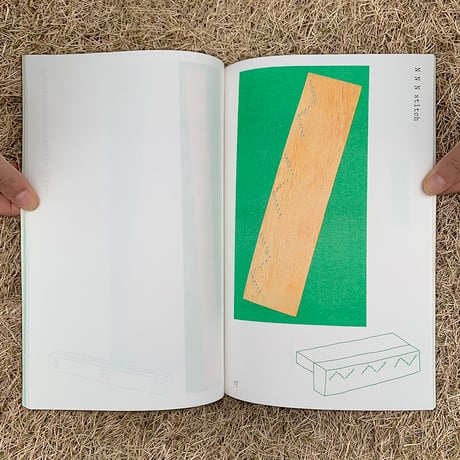
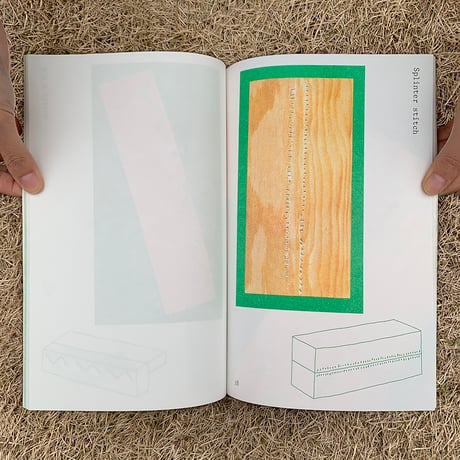
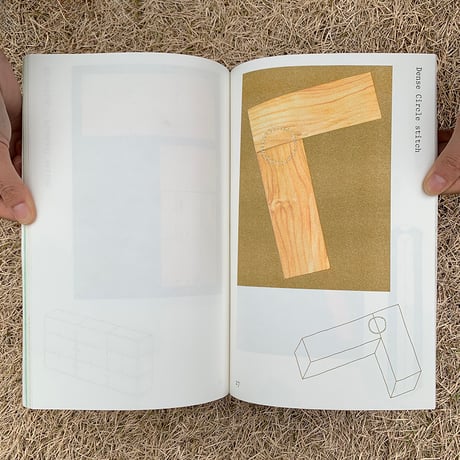
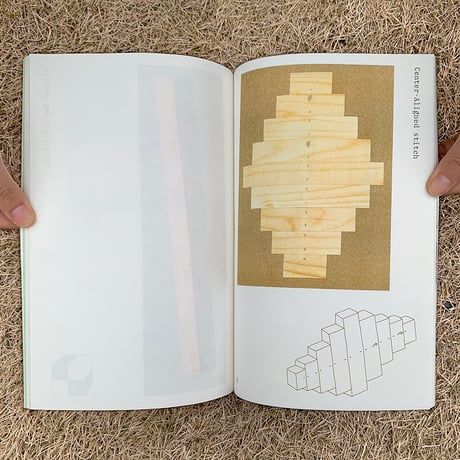
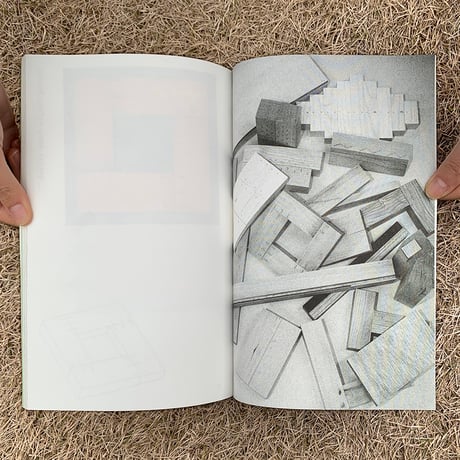
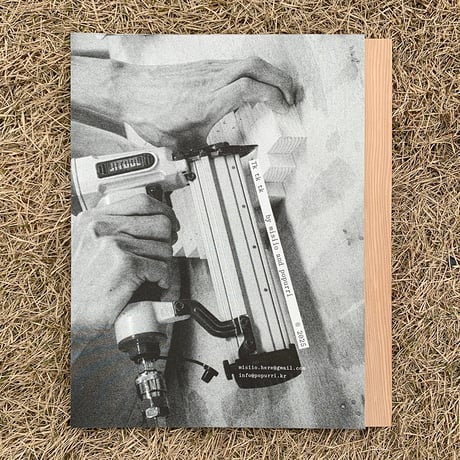
ほとんどの大工は、木材の加工、部材の接合、表面仕上げという同じ工程を繰り返します。本書は、接合に用いられる最も基本的な道具の一つである、ヘッドレスピンネイラーに焦点を当てた一連の実験を記録したものです。ヘッドレスピンネイラーは、主に合板の加工に用いられる釘打ち機の一種です。大工がステープルを使う場合、通常は必要と判断した瞬間にためらうことなく打ち込みます。しかし、必ずしも明確な理由があるわけではありませんが、ステープルの跡を気にする瞬間があります。私が注目したのは、まさにこのためらいでした。そして、そこからステープルの跡に関する実験を始めたのです。
Most carpenters repeat the same cycle: processing wood, joining pieces, and finishing surfaces. This book records a series of experiments that focus on one of the most basic
tools for joining-the headless pin nailer. A headless pin nailer is a type of nail gun, primarily used when working with plywood. When a carpenter decides to use staples, they are usually fired without hesitation, at the moment they are deemed necessary. Yet, for reasons that are not always clear, there are moments when one becomes cautious about the marks left by the staples. It is this hesitation that I chose to observe, and from it, I began an experiment on staple marks.
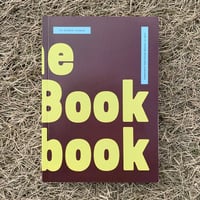
art book
210×269mm
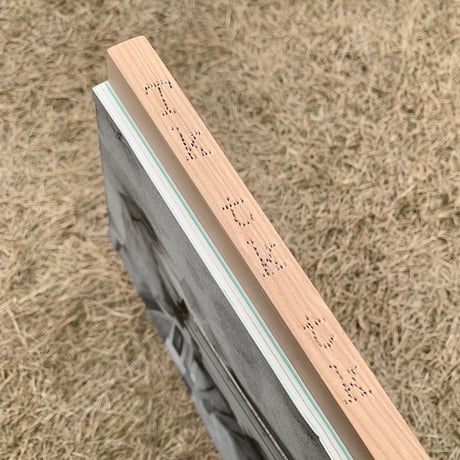
Risograph printed+Handmade Wooden Binding
- - - - -
misiio and popurri
misiioとpopurriはそれぞれ独自のアプローチでスタジオを運営し、リソグラフ印刷と木工技術を用いた実験的な出版を共同で行っています。素材やプロセスを実験的に扱い、新たな出版手法を模索しています。
popurriはリソグラフ印刷とイラストレーションを通して、架空の物語を創造しています。
misiioは木工技術を中心とした家具のデザインと制作を手掛けています。
misiio and popurri operate their studios with distinct approaches, collaborating to explore experimental publishing through risograph printing and woodworking. They handle materials and processes experimentally, seeking new methods of publishing.
popurri creates fictional narratives through risograph printing and illustration.
misiio focuses on furniture design and production, centered around woodworking.
URL: https://popurri.kr/about
instagram: @seinandpopuri
instagram: @misiio.here